Wednesday, July 28, 2010

Walt Disney apples mightn't be Walt Disney for your insides

Just back from a lovely trip to Tipp - one of those long hot days in the car where you arrive home, slam the car door and think - phew, great to be back, but I'm so glad I went down to see those people; they really opened my eyes. There's something special about travelling to meet people in their own homes or place of work, you really get a sense of the issues they are facing and the hard work they are putting in keeping small businesses going in difficult times.

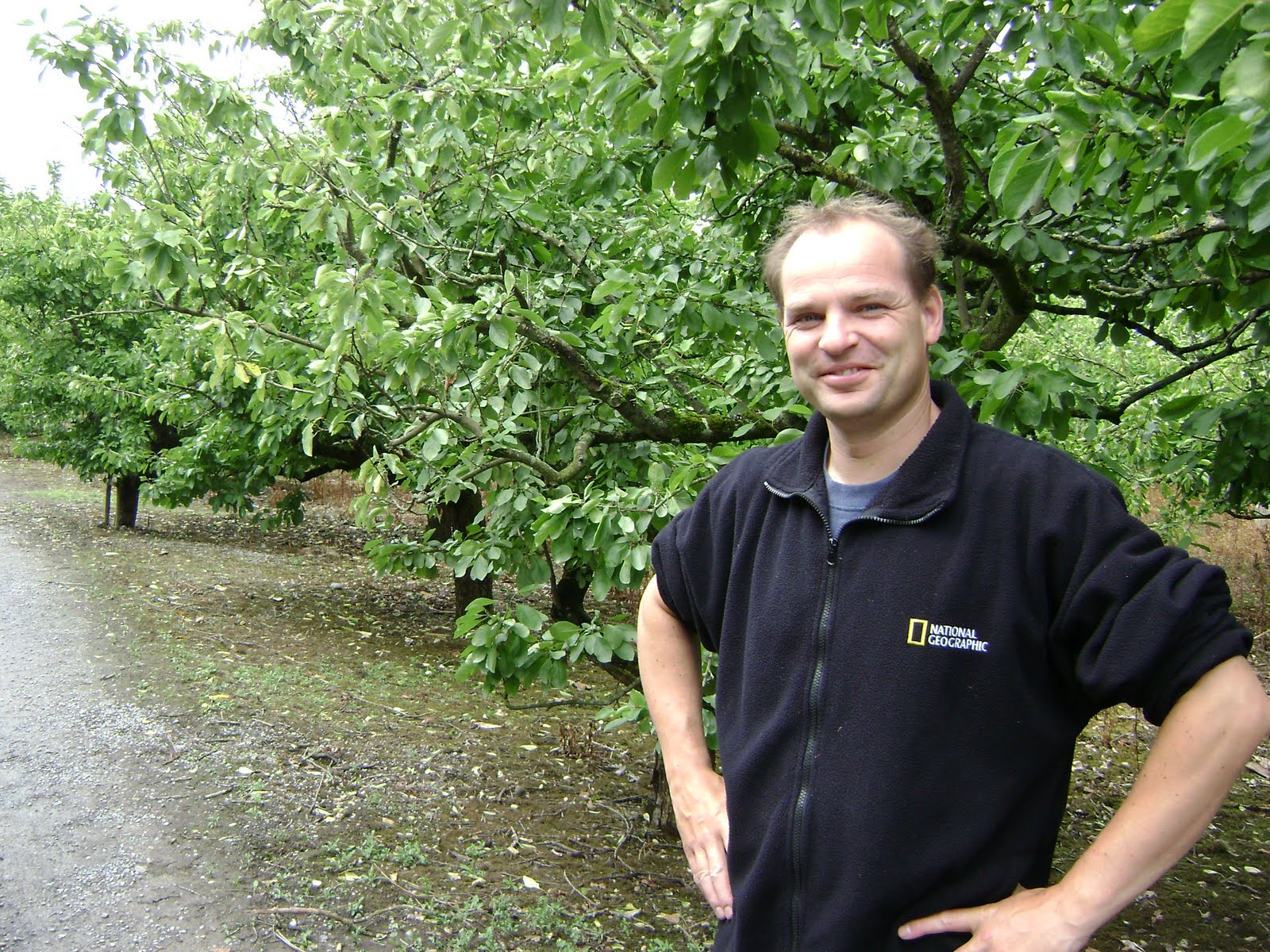
I was interviewing Con for a piece on RTE's Countrywide and we ended up spending several hours walking around his orchards and talking about apples and soft fruit. His farm as is one of the longest standing fruit growing businesses in the country. His parents came from Holland in the 1950s and they have farmed at that location since. Not only have they apples growing commercially but also strawberries, rasberries and other soft fruits, they make their own fruit juices, run a farm camping business and a successful farm shop.


He showed me some of the old Irish varieties of apples which are getting rarer and rarer in Ireland. They are beautiful apples - some a rich red in colour, some pale green, he had over 60 Irish varieties alone. Sadly, many Irish apples bruise, aren't the right colour, don't hold an even texture or have some other kind of small flaw that has made them obsolete in a commercial sense. This is the reality of growing apples on a big scale. Personally I'm sick of "Pink Ladies" from China and tasteless "Granny Smiths" from Chile, the fact that Irish apples aren't available in supermarkets constantly amazes me. Could they not even stock them in small quantities? We have apples at home and just now I'm looking at the tree and looking forward to their unique sweet, but discreetly tart taste. It's a shame that we've let Irish varieties vanish from our shelves. But just because an apples looks like something out of Walt Disney, it may not neccessarily be that good for you.


Con told me how apple growers are leaving the sector in Ireland because of cheap imports, they cannot compete with a Chinese apple which costs next to nothing to produce. You might say this is great for consumers, but what do we know the production standards for Chinese apples - what pesticides and herbicides are used? This is tightly controlled in the EU, not so outside of it. And what are the workers paid who harvest the apples - it's not even worth thinking about.


Fruit growing in Ireland will cease to exist within one generation unless we as consumers look to buy Irish product. It may be a few cents more expensive but what you're getting is quality product produced under safe food standards and where workers are paid a healthy wage. If we ignore Irish fruit and go for the cheapest option, we won't be able find it in the shops in several years time, and ultimately, we will do ourselves out of the option to buy fruit produced in Ireland.


More pictures of Con's farm on my facebook page

Tuesday, July 20, 2010

Please collect my recycling Superquinn

So you do the right thing and buy a Bord Bia approved Irish grown broccoli in an Irish owned supermarket - Superquinn. Douze points. But what the hell - it's shrink wrapped in plastic. Can someone tell the supermarkets to ditch the shed loads of packaging? As for Tesco and M&S - there are villages across the globe that could be re-built with the packaging on a single M&S ready meal. One supermarket shop in our house (rare but hey, they do happen) fills our recylcing bins to the top. I actually spend more time taking packaging from groceries and sorting it out into it's various homes than putting away the groceries. Funnily enough, I am still waiting for a supermarket to call by and collect our Wheelie bins on a Monday.

More on this in Saturday's Indo where I might just go completely mad and name everything about supermarkets that's against the interests of consumers. Let alone farmers.

Thursday, July 15, 2010

Pretend it's the East End 1945, Street Feast this Sunday

Street Feast is a day of local parties across Ireland this Sunday 18th of July, hosted by you and your neighbours. It's free; just bring along some food and a positive attitude. They can be anywhere — on your street, in a local park or in your front garden. It's really just an excuse to eat great food, celebrate local community and meet new people who live near you. There were two really successful ones in Dublin last year - The Sitric Picnic in Stonybatter and Block Party Ranelagh - simply about people wanting to get to know those who we live beside.

In my area - North Wicklow there are two currently organised in Greystones, one in Newcastle, one in Newtownmountkennedy and one planned for Delgany. None I know of in Enniskerry or Bray as yet, I'm off to a barbeque up the mountains that day which probably doesn't count. The idea of bunting and tables of garden veg, charcuterie, wine and olives on our little lane is having me hankering after a street feast of our own. It's a fantastic scheme as it's such a simple idea. It would be great to see it get popular support, after all it's just a giant excuse to party. Find info of street feasts in your local area on their website, download their simple plan for organising a street feast and there's also a forum for who in your area is currently setting them up. www.streetfeast.ie

Tuesday, July 13, 2010

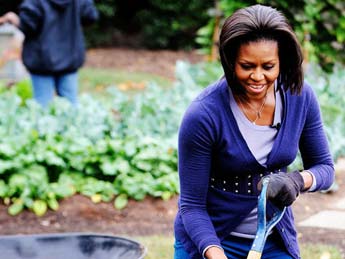
Hey, she's wearing the same gardening outfit as me

Michelle Obama's food garden at the White House will stay with me as one of the most lasting images from her husband's presidency. Most political careers end badly, but her passion for doing something to address America's food wasteland and obesity crisis shows a force for positivity and real passion that go hand in hand with her husband's vision. No matter what happens the presidency, Michelle Obama is a force for change and has brought a whole new level of expectation to the role of the president's wife.


Today, Michelle launches her Let's Move website to bring attention to eating, cooking and food sourcing in the US. I've seen her talking about this and she really is inspirational, particularly because she doesn't try to be something she's not, just a mother who found herself on the wrong side of America's food debacle -


"Before coming to the White House we lived like a normal family. With two parents working we were too busy and trying to maintain some balance. Picking up kids from school, trying to get things done at work... I didn't have enough time to cook a meal for my kids, I was trying to make up for things in a way, so we went out for fast food a lot and ordered pizza. After a point I began to see the effects on my kids - our paediatrician said - you might want to start making some changes. So I did, short easy changes that led to this initiative "Lets Move".


Her goal is to provide more information for parents, to improve the quality of food in schools, to have less "food desert" areas of America which are nutritional wastelands; where the choices of what you eat are severely limited. And finally to encourage families to exercise more. Today she is hosting her first-ever live web chat on AOL Health. Her site at http://www.letsmove.gov/ has great videos and a soft, postive approach to the huge problem that America is facing with the health of its inhabitants. If the graph continues on its present trajectory, those who are children today in America will be the first generation to die younger than their parents. America is at an advanced stage of what is already happening in Europe, it will be interesting to see what a mother, albeit in the White House, can achieve against the might of the multinationals she's up against. I'm following you closely Michelle x

Friday, July 9, 2010

Leave farming to the farmers

Growing food, like shopping for it, certainly has it's ups and downs. I had a bout of severe envy the other day when my neighbour told me her potato plants were up to her waist and her peas were rising to the heavens like something out of jack and the beanstalk.


I made a face and pointed at a bare patch of mud where not one pea came out of the ground this summer, despite three successive plantings. Last year, even with the Noah's Ark type climate we actually had better growth in our veg garden. This summer our tomato plants are still small, and some are only beginning to flower now, which means we will have tomatoes right on cue for Christmas dinner.
Other disasters have been a whole lettuce crop eaten by slugs the first day it peeped through the ground, and healthy courgette plants that mysteriously keeled over one night and never recovered. We've also had a few visits from either rabbits or rats. The field surrounding our house is Watership Down central, and despite there being seven dogs along our lane, the rabbits bound around the place twitching their ears and looking cute in a provocative manner. The dogs yawn, roll over in the grass and snore.


What's been a success this summer is the foreign varieties of lettuce, radishes which are giant sized and a healthy strawberry crop. What I learned yet again is the lesson of planting either too much or too little at the one time. It's a really common mistake - a friend of ours gave us a giant bag of rocket - he had a crop that was way beyond his needs and it would be rotting in the soil by the end of the summer. This time we planted too much lettuce at the one time instead of staggering it - so I have forty lettuces all at the same stage and none coming up to replace them.
I've been naughty and relied on slug pellets to protect them, and have fed the tomatoes with tomato food but as discussed here before, the soil in our garden wasn't up to much. Early in the summer we added in some top soil from a road being dug up at the end of our lane. It was from a field that produces a tillage crop every year, either barley or oats. The patch where we put this soil literally killed everything. I think it was either too pesticide ridden or had no nutrients left as it had been so intensively farmed. Yet another lesson learned. Unless you have several tonnes of NPK most tillage farmed soil produces nothing.


In terms of time management sometimes we moan about the watering which takes about 20 minutes a day at the moment in the dry weather. I also have too many plants in pots which dry out quickly and need a lot of water. We weed the plot occasionally and to be fair it doesn't produce a huge amount of food, but what's more important is the enjoyment we get out of watching its progress, and pottering around with the baby and picking her strawberries straight from the plants. Growing food teaches you patience, and more respect for the people who do it as a full time job. As Philip remarked the other day, if we ever decided to grow food or keep livestock commercially we'd be flat broke. Leave farming to the farmers.


More pictures of the vegetables on my facebook page

Wednesday, July 7, 2010

Hey ho, the supermarkets are at it again

Last week we heard how Ireland has the second highest food and drink prices in the EU. This week it's becoming clearer why. If farmers are barely scraping a living and we're paying way over the odds for our groceries, who exactly is getting the fat in the middle? Eurostat's figures showed that what we pay for food is 29% higher than the EU average. Ireland recorded the highest prices in Europe for dairy produce such as milk and cheese, and despite being the biggest meat exporter in the northern hemisphere - we are still paying the fifth highest meat prices of the 27 countries surveyed.

In an investigation just published, it turns out that the high prices we are paying are the result of multi-national chains abusing their dominant position, poor information on special offers beyond local markets in the EU and the slow growth of e-commerce. The EU commissioner Michel Barnier has just revealed the results of a new study along with the promise to introduce new rules on food retailing in the autumn. Half of all retail in Europe is grocery and is dominated by the big multi-nationals such as Tesco and Carrefour. The report found that prices can vary hugely for products, even for the same product in different outlets that belong to the same supermarket. Barnier's report also found that Ireland is still wrapping its food in huge amounts of expensive packaging, up to six times as much as the lowest member state.


It's always been the case that there has been a disconnect between what food is worth to food producers and what we consumers pay for it. In some cases the contrast is actually offensive to farmers; rendering a unit of production (a beef heifer etc) just not worth rearing by the time you've paid your costs. Many farmers can barely break even, such is the power of the mulitples. Time and time again during the writing of our book and continually still, I am being contacted by farmers who are having terrible treatment at the hands of the multiples, few will give their names as they are terrified of being blacklisted. Especially as summer time is fruit season, it unfortunately coincides with many sad tales from fruit growers. One farmer told me last week how a retailer refused his strawberries even though he had matched the price of their imported product from Chile. Then the supermarket insisted that the farmer collects any unsold product and waste and pays for its disposal. They refused to sell it at a discounted rate, he said they simply couldn't be bothered.
Roll on some proper supermarket ombudsman legislation, transparency of their profit margins, and codes of practise which must insist on fair treatment of producers. I spoke to an Oireactas Committee about this last May, the legislation is in consultation phase, I just hope they get it out into the marketplace to protect both farmers and consumers as quickly as possible.
More at -